

Across time and place, the wisdom of fragrance.
Perfume, perfumery and fragrance materials — and the culture and knowledge that surround them.
About Kaolia
Perfume, perfumery, history. The more we come to know, the more fragrance reveals.
Fragrance cannot be seen, yet its presence is unmistakable. In an unguarded moment it stirs the heart and quietly awakens memories held deep within — a bridge between the present and a distant past.
A single drop can cross time and space. It can bring back a forgotten memory and gently touch feelings long put away.
Fragrance does not simply drift through the air. It is a mirror of the human heart: an art of the senses, and an occasion for reflection.

The name Kaolia joins the Japanese word kaori (fragrance) with qualia, the felt qualities of sensory experience. Kaolia values the stories that fragrance tells, the inquiry into knowledge that it opens, and the new perceptions that arise within each individual.
Between knowledge and perception
Kaolia approaches fragrance from two directions at once. Knowledge — of materials, chemistry, history and the practice of perfumery — sharpens what we perceive. Perception, in turn, gives that knowledge meaning. Our teaching moves continually between the two, so that understanding fragrance and experiencing it deepen together.
01 — Deepen
Encounter the Depth and Beauty of Fragrance
Fragrance is culture. It is connected to history, art and science, and to aesthetics and philosophy.
At Kaolia, we look at the culture of fragrance as a whole, and acquire the knowledge and skills needed to create fragrances. By understanding how important fragrance and the sense of smell are to us as human beings, we can change the quality of our perception.
02 — Create
Creating New Fragrances Through Your Own Sensibility
Fragrance is not something that lies outside ourselves. Whether we wear a fragrance or compose one, it begins with knowing the individual character of our own sensibility.
At Kaolia, we work with the individuality of each person's senses and aim to create fragrances that are unique in the world. Sharpen your senses, and grasp the qualia of fragrance.
Fields of Study
Eight fields that surround fragrance
-

01Perfumery
The composition of fragrance, from the individual material to the finished perfume.
-
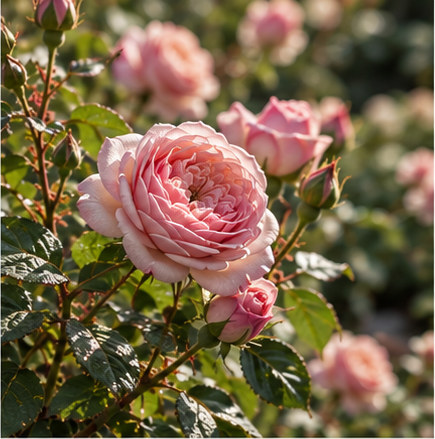
02Fragrance Materials
Natural and synthetic materials: their origins, production and character.
-
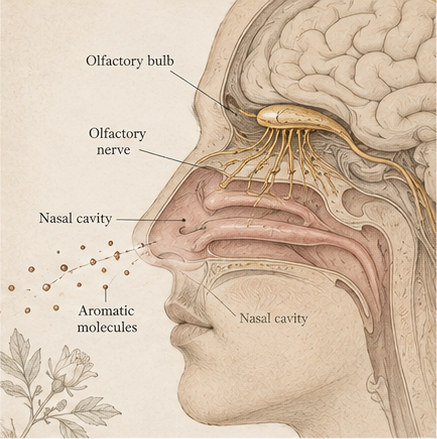
03Olfaction
How the sense of smell works, and how we perceive odour.
-

04Chemistry
The chemical properties of fragrance materials and what they mean in practice.
-
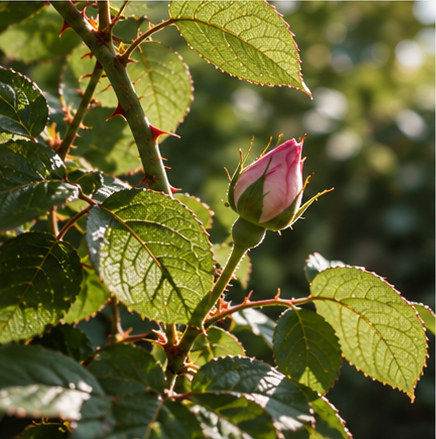
05Botany
The plants from which aromatic materials are obtained.
-

06History
How perfume and its uses have changed over time.
-
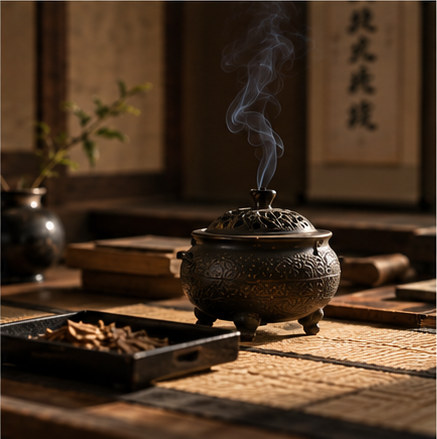
07Culture
Fragrance within cultural life, including the Japanese art of incense.
-
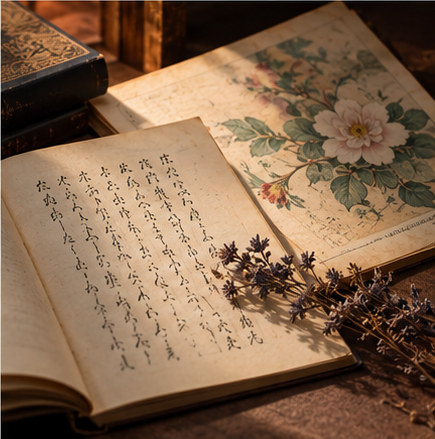
08Art & Literature
Scent as it appears in artistic expression and in the written word.


Kaolia Academy
Giving fragrance a language.
At Kaolia Academy, we believe that one of the skills missing from modern life is the ability to put fragrance into words.
Being able to describe fragrance not only makes communication easier; it also deepens our understanding of scent and allows us to appreciate it more fully.
At Kaolia Academy, we call this ability fragrance literacy. Helping students develop this skill is one of the central aims of our academy.
To know fragrance, to encounter it, to put it into words, to reflect on it, and to compose it.
The Academy offers video courses in two forms: a Knowledge Course that builds the fundamentals systematically, and PROPOS, a series of thematic lectures that can be taken individually. Courses are currently taught in Japanese.
Première Classe
Knowledge Course · Fundamentals · Six lectures
A systematic foundation in fragrance: the vocabulary of scent, the science of smell, the classification of fragrance materials, the training of a perfumer and the language used to describe what we smell.
-
01
Odour and Fragrance
The Japanese words for smell and fragrance — nioi and kaori, in their various written forms — and how their meanings differ today, compared with equivalent terms in other languages.
The origin and meaning of the word kōryō (fragrance material). What is currently understood about the mechanism of olfaction, and how humans perceive odour.
-
02
Classification of Fragrance Materials I
The systems used to classify fragrance materials — by source, by method of production and by application.
A focus on natural materials: what they are, how they are produced and how they are used.
-
03
Classification of Fragrance Materials II
Synthetic materials: the conditions and history behind their emergence, their types and classification, and the chemical properties that matter when handling them.
The essential knowledge for combining synthetic and natural materials in composition.
-
04
The Practice of Perfumery
The training perfumers undergo in their apprenticeship, presented in simple form.
Learning the odour and name of each raw material is the first step; the lecture explains how materials are memorised, what it means to "know" a material, and the stages of the curriculum that lead from single materials to composition.
-
05
The Language of Fragrance I
The terminology of odour families, which allows unfamiliar materials and new fragrances to be placed and understood, and the terms used to classify types of perfume — a basis for appreciating and evaluating perfumes on the market.
-
06
The Language of Fragrance II
Techniques for describing a fragrance so that a general audience can grasp its character — and, in turn, for reading the fragrance copy found in advertising and online.
Includes synaesthetic expression: the borrowing of vocabulary from taste, touch and hearing to describe smell.
PROPOS
Thematic Lectures · Each lecture may be taken individually
Propos is French for a talk. From how to smell, through the changes in the perfume industry, to the history of olfactory families, each lecture in the series takes up a single theme.
PROPOS — Series I
Six lectures-
01
How to Smell: Using Smelling Strips (Mouillettes)
Smelling is closely tied to breathing, yet it is rarely taught.
The lecture explains how to smell correctly, the types and characteristics of smelling strips, and how to use them — including uses that can inform the creation of a fragrance.
-
02
Talks on Perfume I
Reflections on forty years in the industry: the arrival of memorable perfumes, shifting trends in olfactory families, the rise and fall of brands, and changes in the perfume business.
Looking back in order to understand the present — and to consider what makes a truly good perfume.
-
03
Talks on Perfume II
Two or three typical ways in which perfumes are developed, as a window onto the realities of the perfume and fragrance-materials industries.
Also, from the perspective of contemporary perfume history, the rise of niche perfume houses and the "collection" strategies with which established brands have responded.
-
04
Marine and Fruity Notes
Two olfactory families now taken for granted, yet relatively late arrivals in the history of perfume.
Their history and the changes they brought; the use of related terms such as marine, ozonic, transparent and sheer; and the development of fruity notes, at times close to these and at times far apart.
-
05
Chypre and Amber
Two of the best-known terms in perfumery, examined through specialist vocabulary.
The difference between "oriental" and "amber", and the many meanings of the word amber — followed by a selection of celebrated perfumes in each family.
-
06
Talks on Perfume III
François Coty, creator of the first Chypre: his extraordinary life placed within the history of perfume, the circumstances of Chypre's creation, his revolution in perfumery and his innovative marketing and advertising — and a look at the company that bears his name today.
PROPOS — Series II (in preparation)
Six planned themes · Programme subject to changeSeries II is in preparation and is not yet open for enrolment. The planned themes are:
-
07
Green Notes and the Turn to Naturals
Green as an olfactory character; the recent return to natural materials.
-
08
The Birth of Synthetic Fragrance Materials
The history that led to synthetic materials; the nineteenth-century revolution in perfumery.
-
09
Safety and Stability of Fragrance Materials
The regulation of fragrance materials; their stability.
-
10
Fragrance in Literature I
The poets Kitahara Hakushū and Tsukamoto Kunio; a lineage of poetry about scent.
-
11
Gourmand and Edible Notes
The emergence of "delicious" scents; flavour and fragrance.
-
12
Eros and Gender
Fragrance and eros; fragrance and gender.
Faculty
Three perspectives on fragrance
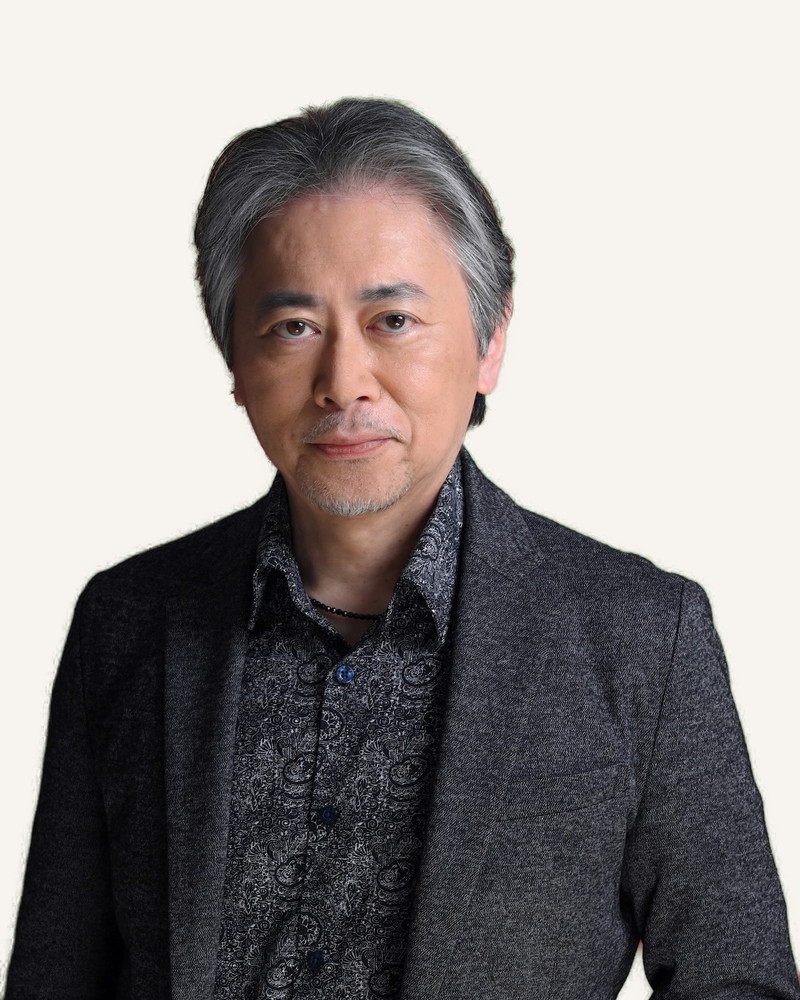
Takashi Suzuki
Perfumer · Researcher in olfactory culture
A former perfumer at Takasago International Corporation and co-representative of Kaolia Academy. After graduating in French literature from Waseda University, Suzuki joined Takasago in 1985 and trained as a perfumer under Pierre Bourdon in Paris from 1986 to 1990. He went on to work as a senior perfumer, principally in Japan and the United States. Alongside his work as a perfumer, he pursues research into olfactory culture — perfume, fragrance materials and the Japanese art of incense — as an external research associate at Doshisha University. He has lectured twice in French in Grasse.
Read Takashi Suzuki's profile →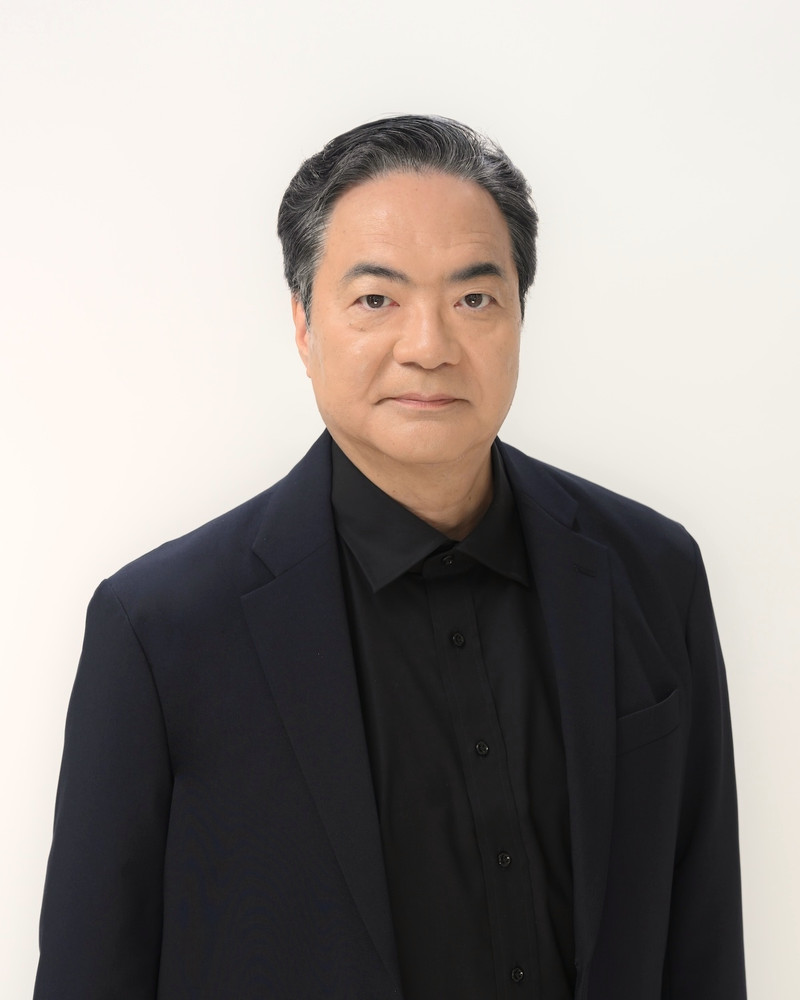
Tomohiro Tezuka
Perfumer · Instructor in perfumery
At Takasago International Corporation, Tezuka worked in manufacturing and in the provision of technical information, and as a department manager oversaw production operations. As a perfumer, his work has been used in products in Japan and abroad. Guided by a commitment to careful, considered fragrance-making, he now teaches perfumery at the Japan Flavor & Fragrance Institute and at Tokyo Biotechnology College. He was twice selected in the POLA Perfume Competition, receiving an Award of Excellence at the sixth edition.

Chieko Takei
Representative Director, Botanique Co., Ltd.
A graduate of Rikkyo University, Takei held managerial positions at Japanese and European financial institutions before studying yoga and Ayurveda in India. She then studied the chemistry and pharmacology of aromatic materials, together with blending techniques centred on fragrance, including perfume creation and the scenting of spaces. She designs scent for commercial facilities and produces fragrance products.
Companies founded
- 2013 — Ren
- 2018 — Botanique Co., Ltd.
- 2022 — Botanique International LLC (USA)
Credentials
- AEAJ Certified Aroma Instructor
- JAMHA Certified Medical Herb Coordinator
- Certified Compliance Manager under Japan's Pharmaceuticals and Medical Devices Act (general and cosmetics)
Research & Cultural Exchange
Where perfumery meets cultural history
Kaolia's work rests on the conviction that fragrance can be studied as seriously as it is enjoyed — through science, craft, language, history and the arts.
Current work
- Education. Kaolia Academy's video courses cover fragrance materials, perfumery, olfaction, the history of perfume and the language of scent.
- Research by our faculty. Takashi Suzuki's research spans the history of perfumery, the language of scent and the Japanese art of incense, including work on the reconstruction of the scent of Ranjatai, the celebrated aloeswood preserved in the Shōsōin Repository in Nara.
- Dialogue between Japan and France. Suzuki has lectured in French in Grasse and contributed to the 2018 inscription of the perfume-related skills of the Pays de Grasse on UNESCO's Representative List of the Intangible Cultural Heritage of Humanity. Chieko Takei created scent direction for a performance at UNESCO Headquarters in Paris as part of Japonismes 2018.
Directions we hope to explore
We would welcome opportunities to develop lectures, educational exchange and research dialogue with museums, archives and institutions devoted to perfume and olfactory heritage, and to introduce Japanese fragrance culture — from incense to the language of scent in poetry — to international audiences.
For Business
Drawing on specialist knowledge of fragrance materials, perfumery and the culture of fragrance, we welcome enquiries from companies and organisations. We listen to your aims and propose an approach suited to them.
Lectures on fragrance materials, perfumery, and the history and culture of fragrance, tailored to your purpose and audience.
The fundamentals of fragrance and how the sense of smell works, structured as staff training or learning programmes.
Cultural and educational projects and collaborations centred on fragrance. We also support the development of fragranced products, and offer consultancy and joint development for fields and items that have not used fragrance materials before.
From composing a perfume to suit your purpose or concept to manufacturing an original perfume (OEM).
Supervision of books, film, product planning and other work that requires specialist knowledge of fragrance. We also support the exhibition and presentation of fragrance.
International Enquiries
Conversations begin with curiosity.
We welcome enquiries from perfume museums, cultural institutions, research organisations, fragrance houses and fragrance professionals concerning lectures, educational exchange, research dialogue and collaborative projects.
Contact Kaolia →