
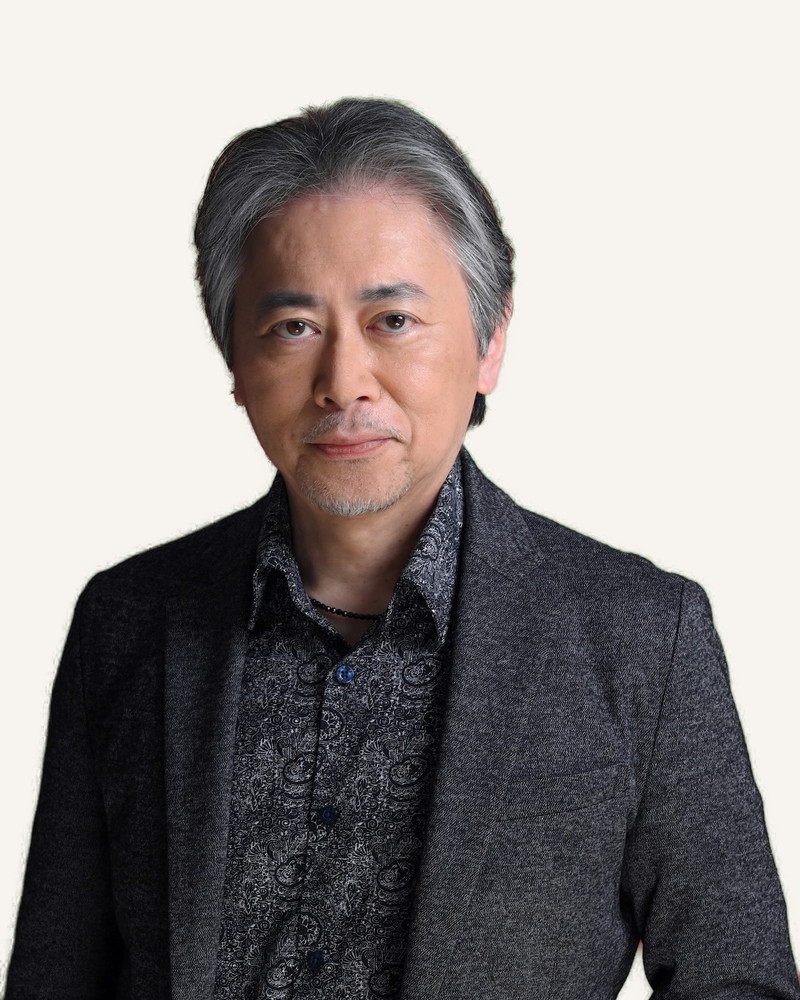
Takashi Suzuki
Perfumer · Researcher in olfactory culture · Faculty, Kaolia Academy
Professional Introduction
Takashi Suzuki is a perfumer and researcher in olfactory culture. A former perfumer at Takasago International Corporation, he trained in Paris under Pierre Bourdon and worked as a perfumer in Paris, in New Jersey and in Japan. Alongside his practice, he researches olfactory culture — perfume, fragrance materials and kōdō, the Japanese art of incense — and writes on how scent is named, described and understood. He has lectured in French in Grasse and contributed to the 2018 UNESCO inscription of the perfume-related skills of the Pays de Grasse.
Professional Background
- 1961
- Born in Tokyo.
- 1985
- Graduates in French literature from the First Faculty of Letters, Waseda University, and joins Takasago International Corporation.
- 1986–1990
- Begins his training as a perfumer at Takasago in Paris under Pierre Bourdon, gaining professional experience in Paris.
- Subsequently
- Works as a senior perfumer, principally in Japan and the United States (New Jersey), with shorter assignments in Shanghai, the Netherlands and Singapore.
- Since 2015
- Committee member of the Association du Patrimoine Vivant du Pays de Grasse. He has lectured twice in Grasse and contributed to the 2018 inscription of the perfume-related skills of the Pays de Grasse on UNESCO's Representative List of the Intangible Cultural Heritage of Humanity, the first inscription relating to fragrance and the sense of smell.
- Present
- Continues to work as a perfumer and, alongside this practice, researches olfactory culture, covering perfume, fragrance materials and kōdō, as an external research associate at the Institute for the Study of Humanities & Social Sciences, Doshisha University.
Memberships: Japanese Association for the Study of Taste and Smell · Society for Chanoyu Culture · Society for Early Modern Kyoto Studies
Areas of Expertise
Perfumery
Composition, the study of raw materials, and the training of perfumers, grounded in four decades of professional practice.
The language of fragrance
The terminology and classification used in the fragrance industry, and how smell is put into words, including synaesthetic expression.
Kōdō and Japanese incense culture
Aromatic woods, their poetic names (mei), and kōdō as a subject of olfactory research.
History of perfume and the fragrance industry
From the history of perfume styles to the early development of Japan's fragrance industry.
Scent in literature and the arts
Fragrance in Japanese poetry, from classical waka to modern tanka, and scent as an artistic medium.
Research & Cultural Contributions
Grasse and UNESCO
As a committee member of the Association du Patrimoine Vivant du Pays de Grasse since 2015, Suzuki has lectured twice in Grasse, in French. He contributed to the 2018 UNESCO inscription of the perfume-related skills of the Pays de Grasse — the first inscription relating to fragrance and the sense of smell.
Ranjatai
Suzuki's recent research centres on Ranjatai, the celebrated piece of aloeswood preserved in the Shōsōin Repository in Nara. Through the reconstruction of its scent, he examines how incense woods are named and appreciated in the Japanese tradition. This work has been presented to the Japanese Society of Sensory Evaluation (2025) and the Japan Incense Manufacturers Association (2026). He also contributed to the co-authored volume Ranjatai no shōtai (2026).
Kōdō as olfactory research
In a paper for the journal of the Japanese Association for the Study of Taste and Smell, Suzuki argues for the study of kōdō as a field of olfactory research.
Fragrance supervision for television
He served as fragrance supervisor for the NHK drama Sniffer (2016), whose protagonist is an investigator with an exceptional sense of smell, taking part from the scenario stage onward.
Selected Lectures & Presentations
-
Waka ni utawareta hana no kaori [The Scent of Flowers in Waka Poetry]
Organised by the committee for the UNESCO inscription of Grasse.
The fragrance of flowers in classical Japanese waka poetry, set within the Japanese aesthetic of nature and the seasons (kachō fūgetsu).
-
Kainoshō Tadaka to Grasse [Kainoshō Tadaka and Grasse]
Organised by the committee for the UNESCO inscription of Grasse.
A presentation on Kainoshō Tadaka, a Japanese who studied in Grasse.
-
Kaori to kotoba: Ranjatai no kaori saigen o tsūjite kōboku no "mei" to "mon" o kangaeru [Fragrance and Language: Names and the Art of "Listening" to Incense Woods, through the Reconstruction of Ranjatai's Scent]
The reconstruction of Ranjatai's scent as a way into mei, the names given to incense woods, and mon, the act of "listening" to incense in kōdō.
-
"Ranjatai" no kaori saigen [Reconstructing the Scent of Ranjatai]
A report on the reconstruction of Ranjatai's scent.
-
Kaori to geijutsu [Fragrance and Art]
A public conversation with an olfactory artist.
-
Garasu kōsuibin (furakon) de furikaeru kōsui no rekishi [A History of Perfume through Glass Perfume Bottles (Flacons)]
A special talk on the history of perfume, told through glass perfume bottles.
-
Reimeiki ni okeru Nihon no kōryō sangyō [The Japanese Fragrance Industry in Its Formative Years]
The history of the fragrance industry in Japan.
Selected Publications
English titles in square brackets are descriptive translations of the Japanese originals. They are not official English titles.
-
Ranjatai no shōtai 『蘭奢待の正体』 [The True Nature of Ranjatai]
Suzuki contributed a section to this study, which is connected with the Shōsōin Office's research on the treasures of the Shōsōin.
-
"Kyūkaku kenkyū to shite no kōdō kenkyū no kanōsei" 「嗅覚研究としての香道研究の可能性」 [The Potential of Kōdō Studies as Olfactory Research]
On kōdō as a field of olfactory research.
-
"Nioi to kotoba: bunrui to hyōgen o megutte" 「においとことば-分類と表現をめぐって-」 [Odour and Language: On Classification and Expression]
The relationship between smell and language, with a focus on the terminology of the fragrance industry.
-
Nioi no erotishizumu 『匂いのエロティシズム』 [The Eroticism of Scent]
On the connections between scent and eros.
-
Nioi no shintairon 『匂いの身体論』 [Scent and the Body]
The relationship between the body and scent, and the changing ways in which smell has been thought about.
-
"Tanka ni miru nioi no hyōgen: Hakushū to Tsukamoto Kunio o chūshin ni" 「短歌に見る匂いの表現-白秋と塚本邦雄を中心に-」 [Expressions of Scent in Tanka Poetry: Kitahara Hakushū and Tsukamoto Kunio]
Other work
Suzuki is also the author of Akushūgaku: jintai-hen 『悪臭学 人体篇』 (East Press, 2000). He supervised the Japanese translation of Kaori no hakubutsu zukan 『香りの博物図鑑』 by Mandy Aftel (Hara Shobo, 2025), and wrote the entry on the culture of fragrance for Ikimono to nioi・feromon no jiten 『生き物と匂い・フェロモンの事典』 (Asakura Shoten, 2025). He has published widely in journals and magazines.
Education at Kaolia
Suzuki is co-representative of Kaolia Academy, where he teaches video courses that join professional perfumery with the history, culture and language of fragrance. The Première Classe Knowledge Course runs from the science of smell and the classification of fragrance materials to the training of a perfumer and the language of scent. The PROPOS lectures take up single themes, such as olfactory families, the history of Chypre and François Coty, and changes in the perfume industry over the past forty years.
Explore the Kaolia Academy curriculum →International Dialogue & Contact
Suzuki welcomes contact from perfume museums, archives, research institutions and fragrance houses. Possible areas include lectures, joint research and exchange on the history of perfumery, the language of scent, and Japanese incense culture.
Contact Kaolia →